The Steam Engine
When George Stephenson’s Rocket was revealed to the world at the Rainhill Trials in 1829, a surprisingly large range of objections was raised. Operators of canals and stagecoaches feared competition from a vehicle that could travel as fast as 25 mph (!) and there were fears about the safety of steam engines and about the effect on the human body of travelling at such speeds. The rest, as they say, is history.
The development of the steam engine was central to the industrial revolution. Now, however, a new industrial revolution is taking shape, powered not by coal but by electricity. Electrification is growing so fast now in China and India (which together make up a third of the world’s population) that it is developing an unstoppable momentum.
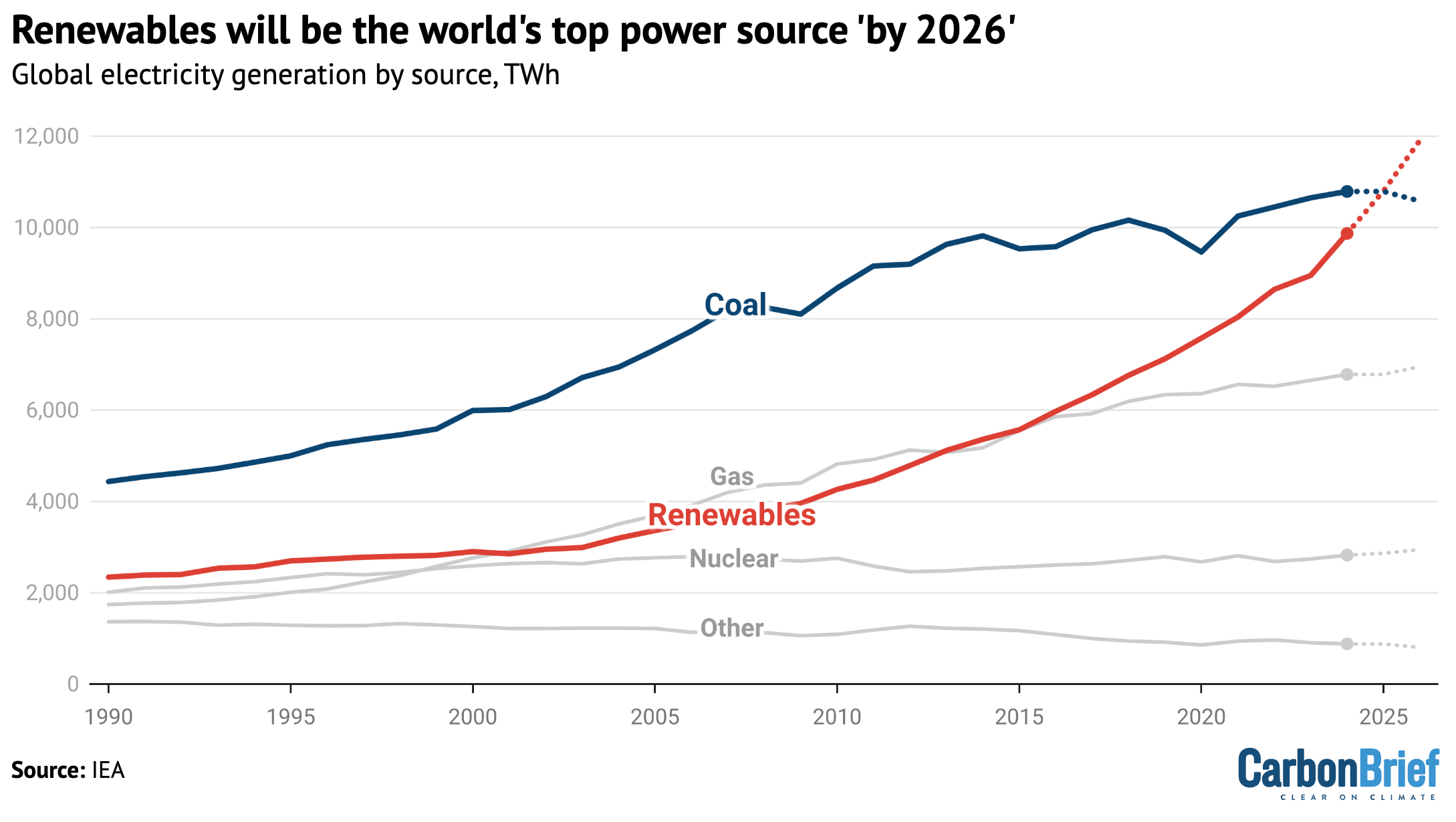
The International Energy Agency (IEA) reports that planned “renewable electricity additions for 2025-2030 total 4 600 GW – equal to the combined installed power capacity of China, the European Union and Japan”.
The Electric Engine
Over 50% of new cars sold in China are electric vehicles (EV); emerging markets are driving an EV boom. The figures are even higher in some European nations (nearly 100% in Norway), but even in the developing world, sales of EV are growing fast. There are two reasons why we should expect EV to become the dominant form of road transportation. First, the unstoppable momentum of clean electrical energy in China, India and much of Asia, combined with the rapid and determined progress of Chinese EV manufacturing. Second, electrification frees nations from dependence on fossil fuel imports. The wealth of the US, the Gulf states and Russia is secure as long as the world is reliant upon the internal combustion engine, and the corollary to this is that developing nations that electrify transportation are freed from having to pay costs they cannot afford to maintain their transportation networks. The spectacular growth of EV production in China and the comparatively low cost and high technological advancement of Chinese EV mean that going green is a no-brainer for much of the world.
The European Motor Industry
In Europe, well-educated, liberal-minded people concerned about climate change have been seen by motor manufacturers as a lucrative market, driven to pay a luxury price for something their conscience demands. European motor manufacturers have lobbied the EU to prevent China from flooding the European market with cheap EV, to protect their profit margins (even as they outsource their manufacturing to China). Rather, they are driven by the pursuit of increasing profit margins, by promoting large, heavy sports utility vehicles (SUVs) over energy-efficient vehicles. They are happy to sell EV provided they are a luxury item. In contrast, Chinese engineering focusses on the production of cheap vehicles aimed at mass markets. The Chinese model is the one that is matched to the needs of the majority of the world. It is not hard to see why emerging markets are electrifying fast.
Although the political right likes to argue that net zero is the invention of “elites”, nothing says “elite” more eloquently than a £130,000 Land Rover that does about 20 mpg. Indeed, the preponderance of fuel-guzzling prestige vehicles on our roads is testimony to the enduring appeal of a ridiculously overweight and over-priced vehicle as a status symbol. But the failure of the European manufacturers to address the realities of the electrification revolution could be their downfall. According to The Guardian, Andy Palmer, a former chief executive of Aston Martin, said: “The worst possible response [from the Europeans] is to blink, slow investment and hope the market somehow resets in their favour. It won’t.”
The Guardian reports:
“These companies are “having a hard time”, said Julia Poliscanova, the director for EVs at the Brussels thinktank Transport & Environment. “They have tariffs in the US, they are nowhere in China [where homegrown brands are booming] … So they’re thinking: ‘Maybe at least in Europe, we can have a few years where we prioritise short-term profits selling petrol and diesel cars.’ That is probably a valid business view if your term as a CEO finishes in two years,” she added. “That is a stupid view if you still want to be in the car market in 2035.”
China’s strategy – of investing heavily to make BYD competitive in terms of both price and technology – appears to be giving it increasing dominance in much of the world. According to The Guardian, Uwe Hochgeschurtz, a former chief operating officer for Stellantis in Europe, said he would have no problem buying a Chinese model.
“The BYDs, the Leapmotors are very good, very nice cars,” he said. “They sell well because they are quite cheap … I would buy one, if I was a normal consumer, I would consider a Chinese car.”
European motor manufacturers will sell any kind of engine provided the price is right petrol engine, hybrid, plug-in hybrid, EV. However, while European manufacturers aim to be jacks of all trades, China has gone all-out for EV dominance. The Guardian quotes Andy Palmer again
“A platform that has to accommodate an internal combustion engine, a plug-in hybrid and a battery electric car is not optimised to anything – it’s the worst of all worlds.”
The Moral Dimension
For many years, the tobacco industry funded a programme of research designed to demonstrate that fears about the safety of tobacco were unfounded. The evidence corroborating the hypothesis that smoking is correlated with greatly increased risk of lung cancer and a variety of other horrible diseases is immense. Nevertheless, despite clear evidence that their product kills people, tobacco producers continue to dispute the harms caused by smoking.The reason is straightforward: there is money to be made from selling one of the most addictive substances known to humanity. Once hooked, people find it very hard to break the habit. There is money – lots of money – in killing people.
Road transportation causes about a quarter of European carbon dioxide emissions. Thus, it is a major driver of climate change. We have a choice: to decarbonise road transportation, or to simply carry on with business as usual. Electric vehicles offer greatly reduced carbon dioxide emissions than internal combustion engine vehicles. However, European motor manufacturers have decided that for the sake of short-term financial gain, they will push back against efforts to decarbonise road transportation, much like the tobacco industry – using confusion and misinformation to promote goals driven purely by short-term profit motives. However, as in many issues to do with climate change, there is here a curious convergence of economics and morality. The business model of European motor manufacturers has come up against the apparently unstoppable momentum towards electrification in much of the world. The Guardian quotes Carlos Tavares, former CEO of Stellantis:
“The only fundamental question for carmakers is how to curb emissions significantly. Those who believe that EVs are not the solution have to explain the ‘how’ without EVs.”
 Science and Non-Science